

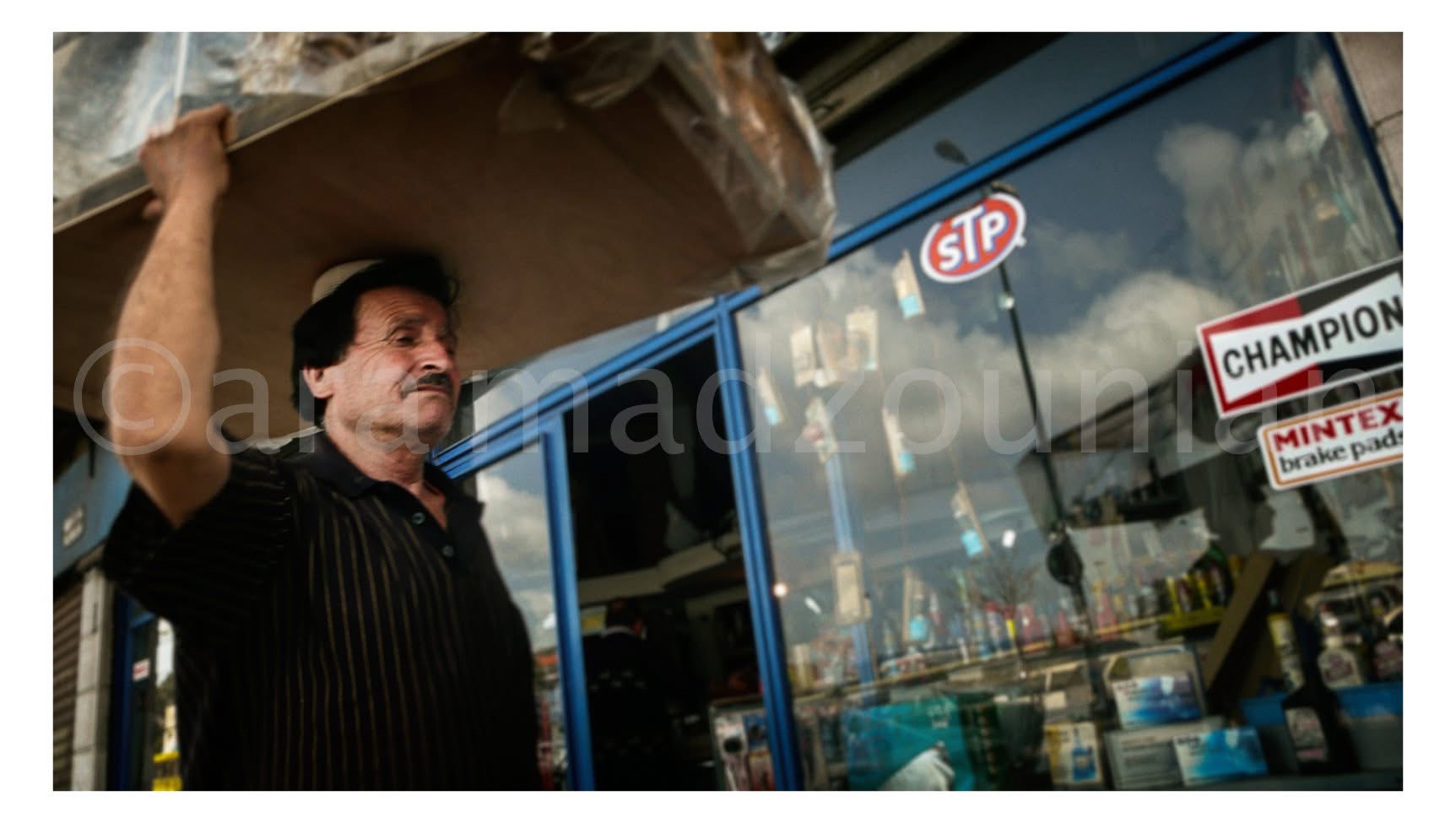

In Bourj Hammoud, late afternoons carried a simple, familiar rhythm. You heard them before you saw them, a steady call rising through stairwells and drifting past balconies: “Kaak El Assriyye,” eat it and feel young again. The voice slipped through open windows and above laundry lines swaying in the air. The bread was small and flat, packed with zaatar and crusted in sesame. Not a full meal, just enough to quiet the hunger. There’s something honest about it. No pretense, just good bread with good filling, exactly as much as you need. Yet it belonged to everyone. It did not matter who you were, broke or loaded, where your family came from, or what language filled your home. It quietly crossed through social and political barriers, moving easily from one hand to another.
The hard working men who carried the boards of kaak balanced on head pads were often from the local Arab Muslim community and were the champions of their families. They walked Armenian streets every day without thinking twice about it. No speeches. No big ideas about coexistence. Just work. A steady walk. A nod. A few coins exchanged. They knew which buildings had children who would run down the stairs, which elders would be waiting by the door with exact change in hand. Over time, faces became familiar. Names were learned. Not in a formal way, just naturally, like neighbors do.
Some of them had already worked a full morning somewhere else. Selling vegetables, unloading goods, doing whatever the day required. The afternoon kaak was one more way to bring something home. Rent had to be paid. Kids had to go to school. Life moved forward one small sale at a time. And as they moved through the neighborhood, they became part of its daily pattern. Their footsteps blended into streets shaped by Armenian memory and rebuilt by shared effort.
Sometimes a basket would be lowered from a balcony with a few coins inside. The kaak would go up wrapped in paper. No words needed. Just trust. Down on the sidewalk, kids fresh from school would huddle around the vendor, coins warm in their palms. They tore the bread apart with their hands, sesame seeds falling to the ground, splitting pieces before dinner or between homework sessions. They laughed. They ate. The vendor waited patiently, then moved on to the next corner.
There was nothing dramatic about it. No grand story. Just the quiet habit of people living side by side. The kaak seller walking his route. The Armenian family opening their door. A small exchange that happened again and again, until it simply felt normal. And maybe that was the point.
PS: For those interested in Bird’s Nest: A Photographic Essay of Bourj Hammoud, it’s available at Abril Bookstore, or DM me for a signed copy delivered to you.
Pictured: Assriyye vendor Ara ©aramadzounian