


For years, Bourj Hammoud had its own ways. Armenian political parties, operating quietly from behind the scenes, policed the streets. The neighborhood ran its affairs, its rhythms shaped by unspoken rules. But in the early 1970s, before the civil war fully erupted, some Armenian street bosses crossed lines the community could no longer tolerate.
Small-time racketeers, they extorted shopkeepers, embezzled money, and ruled the quarter through intimidation. Many were violent gamblers, engaged in illicit trades, preyed on neighborhood women, even married ones, and terrorized anyone who stood in their way. Some went further, taking bribes and turning public housing into a hub of corruption.
The community knew them as zaims, men who commanded blocks through reputation, muscle, and quiet influence. They crossed invisible lines and broke the codes that had kept the neighborhood breathing. Elders warned them. Shopkeepers begged. Neighbors whispered. Nothing changed. The streets grew tense. Every corner held its breath. Rumors of a reckoning drifted through the air, a shadow moving closer.
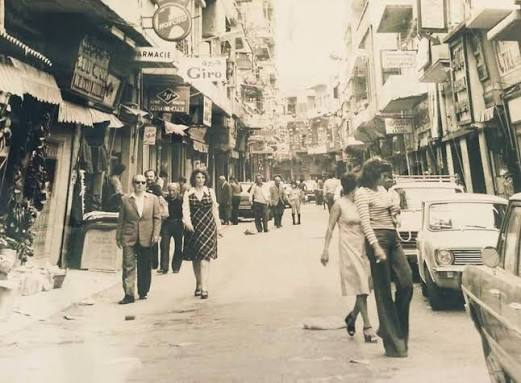
Then came the “White Mercedes.”
An organized group, never named but widely understood, stepped in. Half-masked men in a white Mercedes car confronted the zaims in broad daylight, ambushing them in moving cars, on busy streets, outside movie theaters, in full view of the public. No bystanders were harmed. Within weeks, the names that once ruled the corners vanished. The neighborhood grew calm, as if it had finally exhaled.
What made the White Mercedes so effective was not only the violence, but the ruthless efficiency. No trials. No explanations. No headlines. Sudden arrivals. Swift encounters. Executions carried out with absolute precision. The accused were given no voice, no second chance. Lebanese police stayed away, whether from fear, quiet agreement, or an understanding that this was beyond their reach. The white car became a symbol of invisible authority, a reminder that street bravado had limits and that the neighborhood was being reshaped by forces outside any law.
This was not chaos for its own sake. It was control. A community that had survived genocide, exile, and rebuilding was not about to let a handful of reckless men tear it apart. To many residents, the violence felt like grim protection, brutal, bloody, necessary. Others saw it as the moment justice slipped away, replaced by something colder and more final.
Decades later, that memory still lingers in Bourj Hammoud, not as legend, not as nostalgia, but as a hard truth about what the community was willing to accept, and what it cost.
PS: For those interested in Bird’s Nest: A Photographic Essay of Bourj Hammoud, it’s available at Abril Bookstore, or DM me for a signed copy delivered to you.
Crossroads ©aramadzounian